2026 Bitcoin Mining Guide: How Beginners Can Start Mining, Calculate Returns, and Improve Profitability
By 2026 Bitcoin mining is a highly specialized industry, and profitability hinges on operational efficiency. This guide walks beginners through what mining is, whether it still pays, how to pick ASIC miners, calculate returns, choose a pool, and why uptime and operations now decide real revenue.
Introduction
Many people ask the same questions when they first learn about Bitcoin mining:
- Can Bitcoin still be mined today?
- Is Bitcoin mining profitable?
- What equipment do I need to buy?
- Can I mine Bitcoin at home?
- Which is more cost-effective: mining Bitcoin or buying Bitcoin directly?
More than a decade ago, Bitcoin mining might have required only a computer, and it could even be done with a CPU. By 2026, however, Bitcoin mining has become a highly specialized industry. Anyone who wants to get involved in Bitcoin mining needs to consider multiple factors, including miner selection, electricity costs, mining pool revenue, cooling systems, mining site operations, and miner management efficiency. To become a miner, you need to study and understand this knowledge systematically.
This guide starts from the basics and walks you through the complete process of modern Bitcoin mining. Whether you are a beginner who wants to try mining at home, someone researching miner ROI, or an operator who already owns miners and wants to improve revenue, this article will help you build a complete understanding.
What Is Bitcoin Mining?
Bitcoin mining is essentially the process of using computing equipment to participate in transaction verification and block production on the Bitcoin network. Miners continuously calculate hashes to compete for the right to record a new block. Once a miner successfully finds a valid block, they receive the block reward and transaction fees as compensation.
As of 2026, Bitcoin block rewards have entered the cycle after the fourth halving. Miner revenue mainly comes from newly issued BTC and on-chain transaction fees.
Is Bitcoin Mining Still Profitable in 2026?
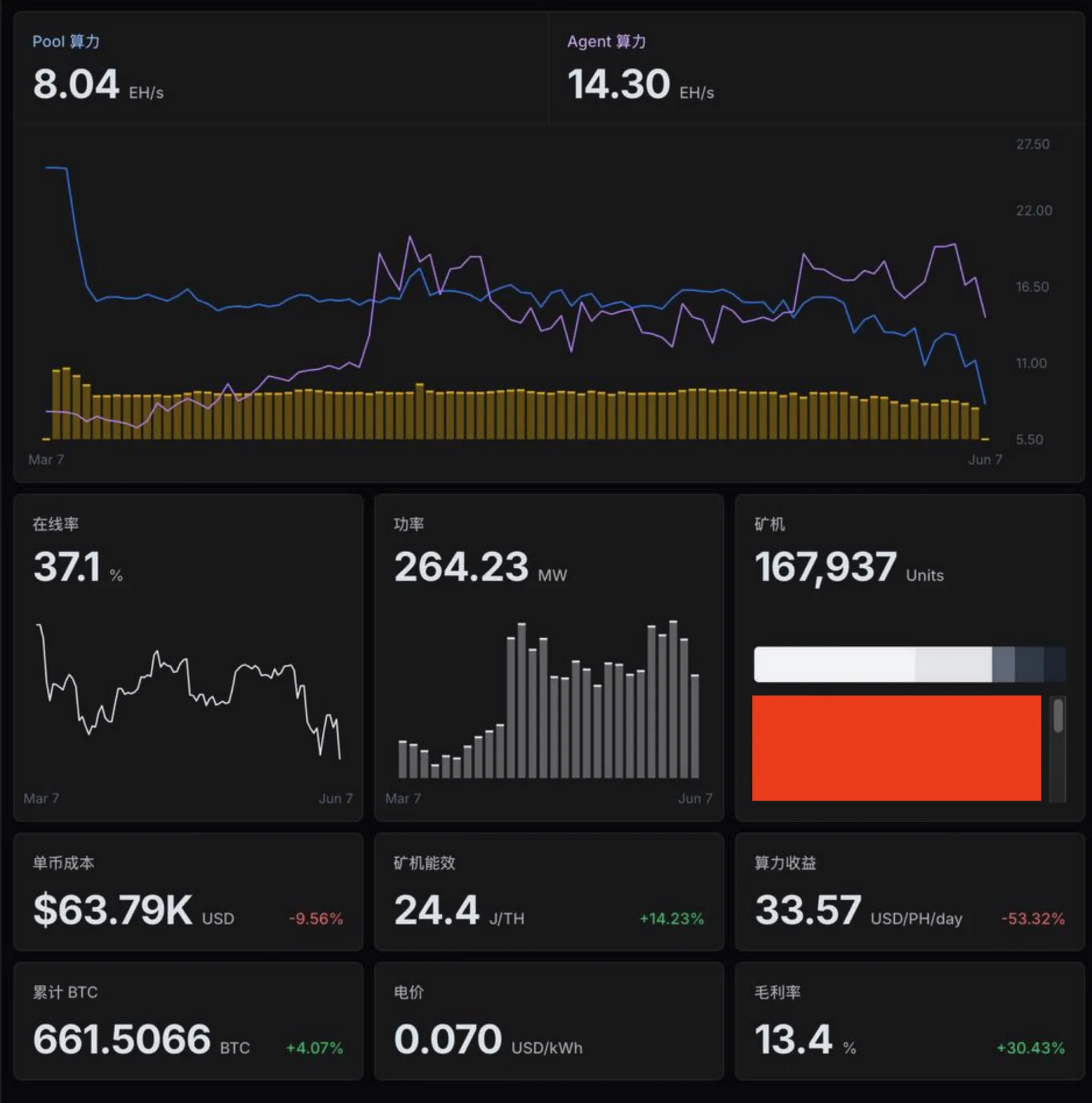
Is Bitcoin mining still profitable today? This is probably the question every beginner cares about most. According to data on public Bitcoin mining companies published by Nonce — which mainly comes from listed miners’ financial reports and official disclosures — the cash cost per BTC mined was $63k in Q4 2025 and $46k in Q1 2026, while the current Bitcoin price is around $63k. Cash cost per BTC refers to the direct cash cost incurred by a company to mine one BTC on average. It excludes miner depreciation, amortization, impairment, stock-based compensation, interest, taxes, and non-mining costs, and mainly includes energy costs, usually electricity, and operating costs.
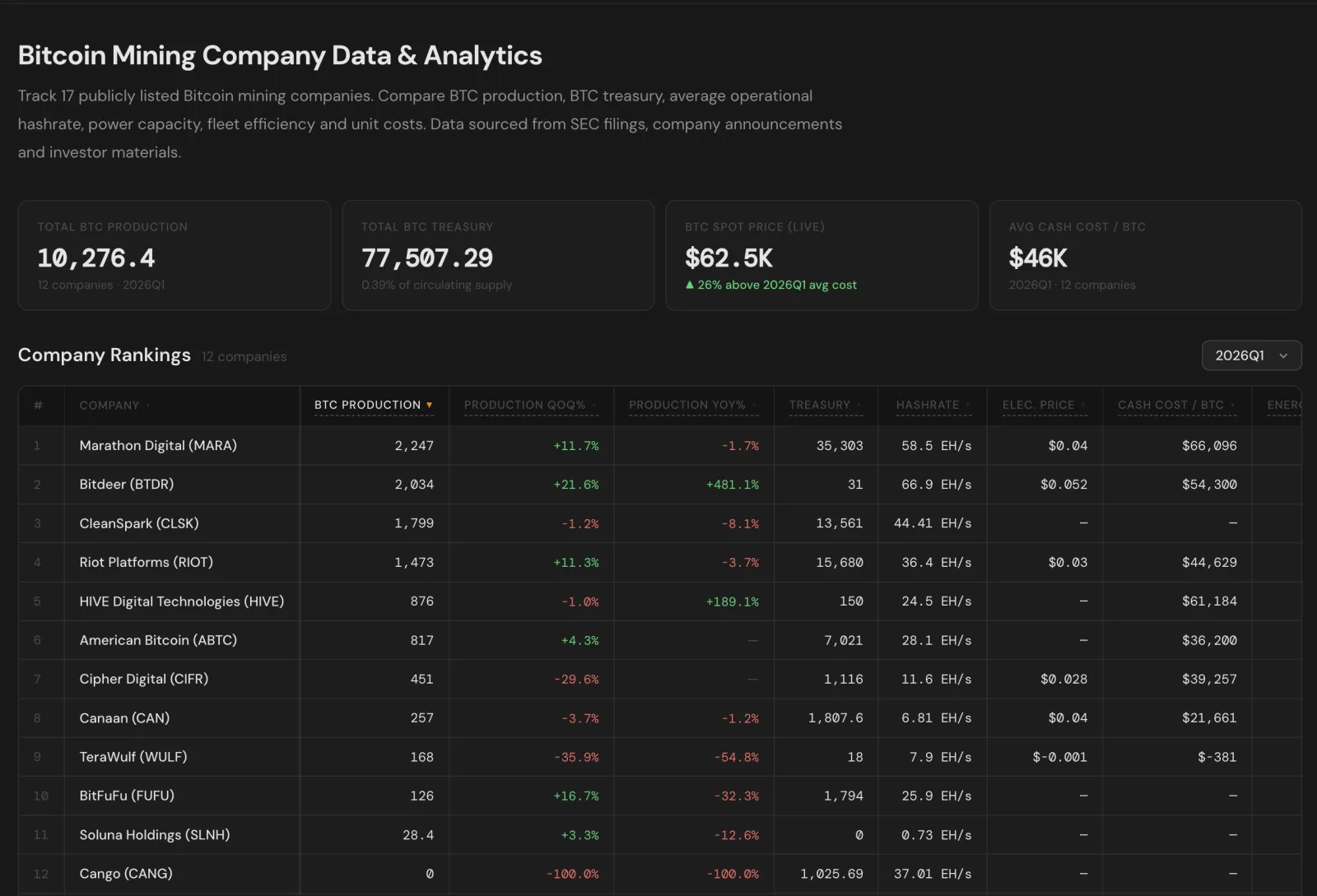
Although the current market price is still profitable compared with the average mining cost in Q1 2026, it is clear that Bitcoin mining now depends increasingly on operational efficiency. Ten years ago, the performance gap between miners was relatively limited. Today, competition among miners is centered on electricity prices, miner efficiency, uptime, and operations capability. To remain profitable over the long term, miners must be competitive across these dimensions.
For example, according to Nonce, Marathon Digital’s mining cost was approximately $66k in Q1 2026, while Riot Platforms’ cost during the same period was $44k. The difference mainly came from Riot’s access to cheaper electricity. For most Bitcoin mining sites, however, mining continues to provide Bitcoin at a cost below the market price, which is why many miners continue operating over the long term.
Mining Bitcoin vs. Buying Bitcoin Directly: Which Is Better?
Many investors struggle with whether they should buy mining machines or simply buy BTC directly. In reality, the two approaches suit different types of people. If your goal is to accumulate BTC over the long term and you have access to low-cost electricity, mining often has an advantage. If you are simply investing in BTC price appreciation, buying Bitcoin directly may be easier. In fact, many large miners use multiple strategies at the same time: buying BTC, mining BTC, and holding BTC. This allows them to benefit from market upside while continuously accumulating new BTC through mining.
| Comparison Item | Bitcoin Mining | Buying Bitcoin Directly |
|---|---|---|
| Initial Investment | High | Low |
| Technical Barrier | Relatively High | Very Low |
| Electricity Cost | Yes | No |
| Ongoing Operations | Required | Not Required |
| Cost to Acquire BTC | May Be Below Market Price | Purchased at Market Price |
| Source of Risk | Equipment and Operations | Market Price Volatility |
| Learning Value | High | Low |
Best ASIC Miners for 2026
After entering the Bitcoin mining industry, the first problem you need to solve is which miner to buy. For beginners, the more miner models there are, the easier it is to feel lost. In reality, miner selection only requires attention to three core indicators: hashrate, energy efficiency, and purchase cost.
Hashrate
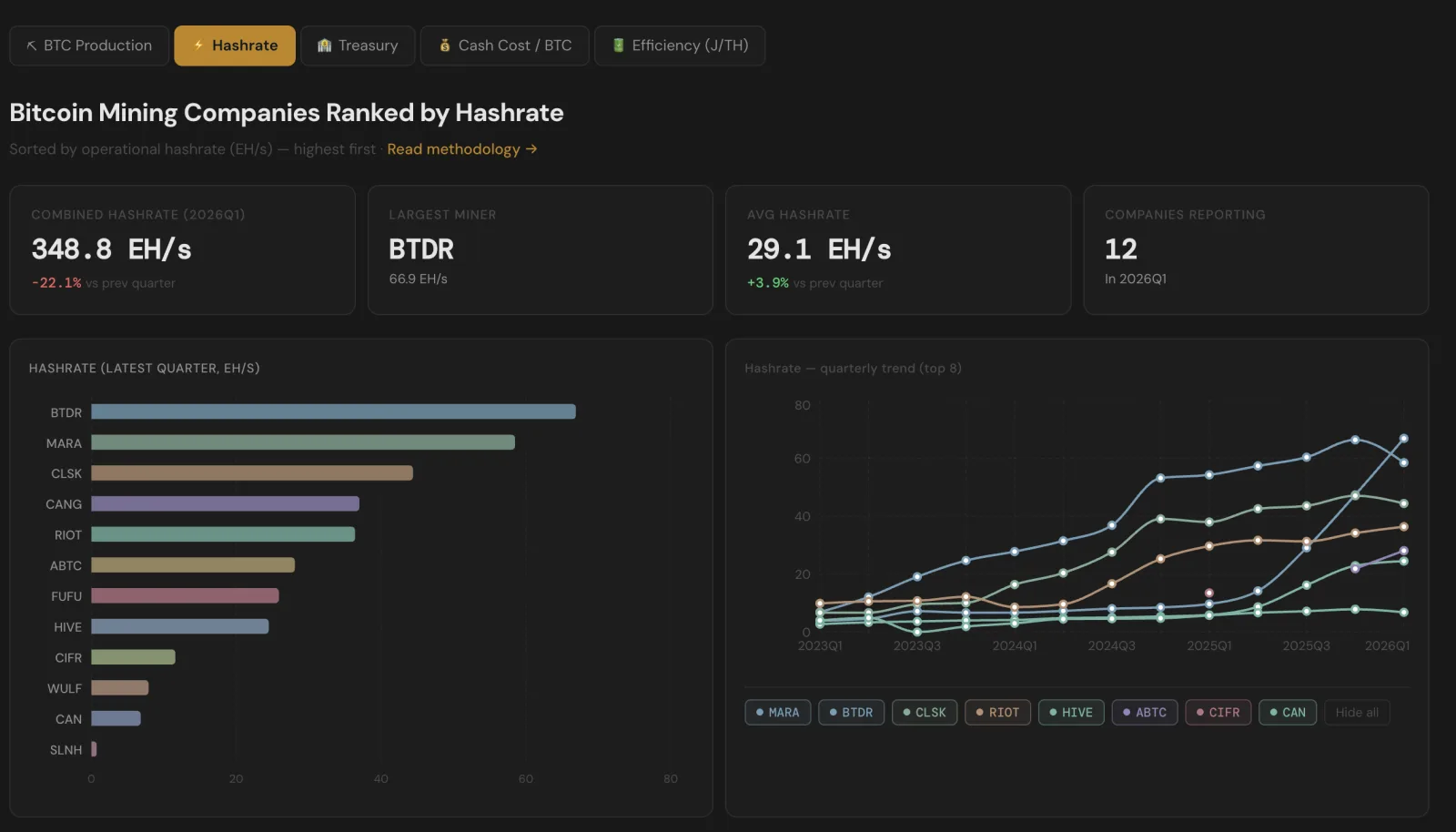
Hashrate is usually measured in TH/s or EH/s. It indicates how many hash calculations a miner can perform per second. In general, the higher the hashrate, the higher the theoretical output. According to Nonce, Bitdeer ranked first among all listed mining companies in Q1 2026 with an average hashrate of 66.9 EH/s, which may also be related to its role as a Bitcoin mining hardware developer.
Energy Efficiency
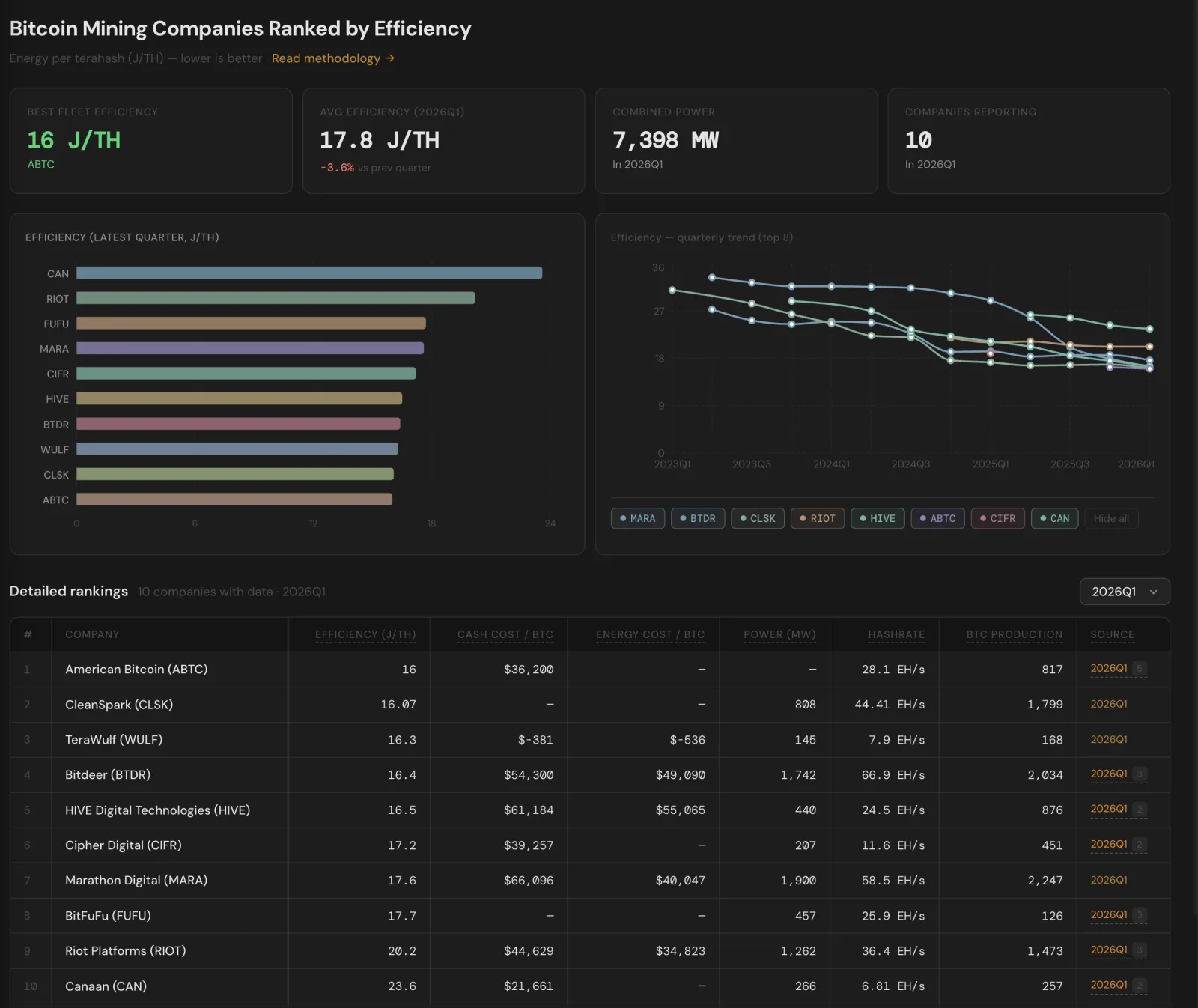
Energy efficiency is the metric many beginners are most likely to overlook. Its unit is J/TH, or joules per TH, and it represents how much energy a miner consumes to generate 1 TH of hashrate. The lower the number, the better.
For example, between 15 J/TH and 20 J/TH, 15 J/TH is clearly more energy efficient. In long-term operations, energy efficiency is often more important than hashrate. According to Nonce ABTC had the lowest energy efficiency ratio among mining companies in Q1 2026 at 16 J/TH, and its cash cost per BTC was also controlled at $36k, which was relatively low.
Purchase Cost
A more expensive miner is not always better. Miner prices are affected by factors such as BTC price, market sentiment, new model releases, and second-hand machine supply. Therefore, the payback period is more important than the miner’s purchase price itself.
| Miner Model | Hashrate | Power Consumption | Energy Efficiency |
|---|---|---|---|
| Antminer S21 XP | 270 TH/s | 3645W | 13.5 J/TH |
| Antminer S21 Pro | 234 TH/s | 3510W | 15 J/TH |
| Whatsminer M66S | 298 TH/s | 5513W | 18.5 J/TH |
| Whatsminer M60S | 186 TH/s | 3441W | 18.5 J/TH |
| Avalon A1566 | 185 TH/s | 3420W | 18.5 J/TH |
Which Miner Is Best for Beginners?
If you are pursuing the highest efficiency, Antminer S21 XP is recommended. It is one of the most energy-efficient mainstream models today, which puts less pressure on electricity costs and delivers relatively stable ROI.
If your electricity cost is low, Whatsminer M66S is recommended. It has higher hashrate and performs well in low-electricity-cost environments.
If your budget is limited, a second-hand S19 XP is recommended. It has a large installed base, abundant spare parts, and mature operations experience. Many mining sites are still running large numbers of S19-series machines today.
How to Calculate Bitcoin Mining Revenue
Many beginners ask how much they can earn per day after buying a miner. In reality, mining revenue changes every day because factors such as BTC price, network difficulty, total network hashrate, and transaction fees are constantly changing. There is no fixed revenue, but the logic for calculating revenue is consistent. Today, mining site management tools such as Nonce.app allow miners to view their estimated mining revenue in real time.
Why Do Many Profitable Miners Still Fail to Make Money?
Many beginners assume that once a miner is powered on, it will automatically make money. In reality, the real challenge of a mining site is operations. Common issues include:
- Miners going offline
- Abnormal hashrate
- Excessive temperature
- Fan failure
- Power failures
- Network failures
If miners are offline for several hours per day, actual revenue will drop significantly. For example, if 100 miners are offline for one hour every day, annual losses may reach tens of thousands of dollars. As mining sites scale up, operational efficiency becomes just as important as miner performance. To improve operational efficiency, mining sites generally use mining operations SaaS platforms to monitor miner performance and identify problems as soon as they occur.
How to Choose a Mining Pool? Which Pool Should Beginners Join?
For most miners, joining a mining pool is almost required. The reason is simple: the Bitcoin network produces only about 144 blocks per day on average. If you mine alone, unless you operate a large-scale mining site with several EH/s of hashrate, you may not find a block for months, years, or ever. The role of a mining pool is to aggregate the hashrate of many miners. When the pool finds a new block, rewards are distributed according to each miner’s hashrate contribution. Although each single reward is smaller, income becomes more stable.
Major global mining pools currently include:
| Mining Pool | Features |
|---|---|
| Foundry USA | One of the world’s largest mining pools |
| Antpool | A mining pool under Bitmain |
| ViaBTC | Supports multiple settlement models |
| F2Pool | A long-established mining pool |
| Luxor | Designed for professional miners |
| Braiins Pool | The oldest mining pool in history |
When choosing a mining pool, focus on pool fees, settlement models, stability, latency, and data analytics capabilities.
Why Are Theoretical Revenue and Actual Revenue Different?
This is one of the most easily overlooked issues in the mining industry. Many miners use revenue calculators. For example, if one miner shows daily revenue of $15, they assume that 100 miners should generate $1,500 per day. In reality, that often does not happen, because revenue calculators usually assume that miners are online 100% of the time, while real-world conditions are different. This involves a professional term: uptime.
Using the same assumption, you have 100 miners, and each miner has theoretical daily revenue of $15. Total daily revenue should therefore be $1,500. But in actual operations, network failures, power issues, temperature abnormalities, fan failures, and other problems may reduce average uptime to only 95%. Actual revenue would then be discounted by 5%, or about $1,425. Over a full year, the loss would be $27,375. This is only for 100 miners. For mining sites with 1,000, 5,000, or even tens of thousands of miners, every 1% improvement in uptime can bring hundreds of thousands or even millions of dollars in additional revenue.
What Do Professional Mining Sites Really Care About?
Many beginners think the core of a mining site is buying the newest miners. In reality, large-scale mining sites increasingly focus on Bitcoin per watt, meaning how much BTC can be generated per watt of electricity.
This is because mining sites ultimately compete not on the number of miners they own, but on operational efficiency. Professional mining sites monitor uptime, average hashrate, temperature, fan status, power efficiency, anomaly alerts, and revenue deviation every day. The question is not whether miners will fail. The real questions are how quickly failures can be detected and how quickly they can be resolved. This requires professional mining operations SaaS tools.
Suppose a mining site has 500 miners. Every day, it may face issues such as devices going offline, hashrate decline, overheating and frequency reduction, power anomalies, and network fluctuations. If the team relies on manual inspections, efficiency will be low and problems can easily be missed. At this point, the mining site needs an automated operations system, not just mining machines themselves.
AI Is Changing Mining Site Operations
In the past, mining site management relied on Excel spreadsheets, manual records, or old management software such as BTC Tools. Today, more and more mining sites are adopting AI-driven operations management platforms. These systems can:
- Automatically detect anomalies
- Monitor miners in real time
- Analyze revenue losses
- Optimize operations strategies
- Improve overall uptime
This helps mining sites achieve higher actual revenue.
Many miners spend a lot of time studying which miner has higher hashrate or which miner is cheaper. But over the long term, what truly determines revenue is often operational capability, not the equipment itself.
The same miners can produce final revenue differences of 10% or even more under different operations teams. This is why more professional mining sites are investing in miner management and automated operations systems, rather than only buying more equipment.
How Does Nonce Help Modern Mining Sites?
For miners who own anywhere from dozens to tens of thousands of machines, management efficiency has become an important part of revenue. Nonce provides an operations management platform built for modern mining sites.
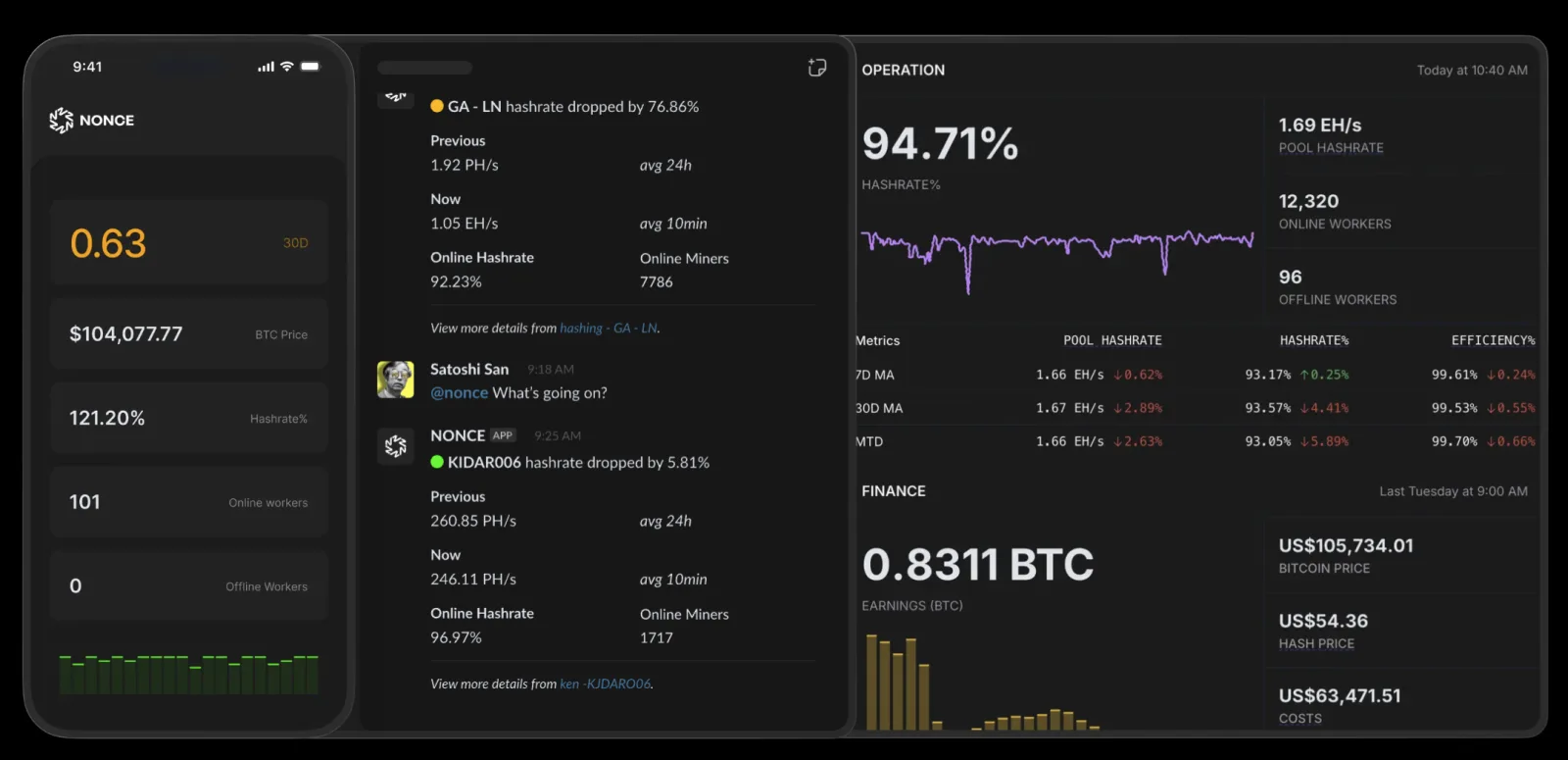
Through a unified management interface, miners can:
- Monitor miner status
- Track uptime
- Analyze revenue performance
- Identify abnormal devices
- Optimize operational decisions
Its core goal is not to make miners buy more equipment. Instead, it helps miners generate more revenue from the equipment they already have. In the mature Bitcoin mining industry, true competitive advantage often comes from higher uptime, faster issue response, and more efficient operations management.